What is a JayDiva?

JayDiva (noun) a writer of blogs who is an attorney, feminist, New Englander, child advocate, reader, hiker, cancer survivor, Mormon.


Sunday, February 22, 2015

"Feminism"

Feminism” has become a loaded term, to say the least.

For me, the word often conjures images of bra-burning, sexually promiscuous radicals of the 1970’s.  It also makes me think of 1980’s shoulder pads and power suits.

Many women hear the word “feminist” and cannot shake the ridiculous stereotype of Lesbians who think the world would be better without any men at all.


I attneded a conservative university (understatement!) and I recall hearing my female peers again and again—typically when in the company of a young man they hoped would woo them—declare, 

“No, I’m not a feminist!   
Call me traditional, but I love men and I don’t think I need
 to be better than them to feel good about myself.”

This stance always confused me.  Being a feminist does not mean you can't love men.  It also doesn't mean that you can’t be happy and satisfied with yourself unless you are somehow fundamentally viewed as better (whatever that means…) than a man.  In fact, you don’t even have to be a female to be a feminist.

So why the visceral, negative reaction to the very word—feminist, I wonder?

It always appeared to me that these college ladies were convinced that touting themselves as “feminists” would make them less desirable for men or somehow less worthy of male admiration.  As if a real woman who respects men, wants to have children with a man someday, and doesn’t want to immediately tear patriarchy to pieces cannot possibly also be a feminist.

ERROR.

This is incorrect.

Feminism has come to be defined by its connotation, rather than its denotation.  So let’s educate ourselves.

feminism
[fem-uh-niz-uh m] 
noun
 The doctrine advocating social, political, and all other rights of women equal to those of men.

Do you see anything about bringing men down?  Do you see anything about being a Lesbian?  Do you even see anything about being a female? 

Me neither.


Feminism is about bringing women up, not about bringing men down.  It is about allowing women the same rights and opportunities to rise, succeed, and lead in political, economic, social, business, educational (ETC.) realms that men currently enjoy.

Whether you want to admit it or not, even though we have had the right to vote for a hundred years, there are still many other rights –spoken or implied—that are currently out of our reach.

I had a Womens Studies professor from Stanford University who bemoaned that she could never quite get the opportunities to have buddy-buddy time with her (mostly male) superiors because (get this!) she was aware that most important promotional decisions were made among the top men while they were all together AT THE URINAL in the men’s bathroom. 

     1)   Gross.
     2)  Wow.  Talk about going to great lengths to keep the ladies from being a part of the discussion.

So she fought fire with fire and started making smalltalk with the few female executives in the ladies restroom, too!  She claimed she would never have gotten the job she ultimately received if she hadn’t been building cliques in these intimate moments.

But should it really be like that?  Should we have to go behind closed doors to try to scam our way to the top in secret societies and compacts that equal those of our male competitors?  Well, I don’t think they have to be our competitors at all.  I think that the most progress will be made when men are our allies in the cause of equal rights for women.

Emma Watson made big headlines by thinking this way recently in a now-famous speech she made at the United Nations.


She did a great job, so I will quote much of what she stated:

“Today we are launching a campaign He For She. I am reaching out to you because we need your help. We must try to mobilize as many men and boys as possible to be advocates for change. We don’t just want to talk about it. We want to try and make sure it’s tangible…

“The more I spoke about feminism, the more I realized that fighting for women’s rights has too often become synonymous with man-hating. If there is one thing I know for certain is that this has to stop. For the record, feminism by definition is the belief that men and women should have equal rights and opportunities. It is the theory of political, economic and social equality of the sexes.

“[My] recent research has shown me that feminism has become an unpopular word. Women are choosing not to identify as feminists. Apparently, [women’s expression is] seen as too strong, too aggressive, anti-men, unattractive.

“Why has the word become such an unpopular one? I think it is right I am paid the same as my male counterparts. I think it is right that I should make decisions about my own body. I think it is right that women be involved on my behalf in the policies and decisions that affect my life. I think it is right that socially, I am afforded the same respect as men.
“It is not the word that is important. It is the idea and the ambition behind it because not all women received the same rights I have. In fact, statistically, very few have.

“In 1997, Hillary Clinton made a famous speech in Beijing about women’s rights. Sadly, many that she wanted to change are still true today. Less than 30% of the audience were male. How can we effect change in the world when only half of it is invited to participate in the conversation?

“Men, I would like to give this opportunity to extend your formal invitation. Gender equality is your issue, too. To date, I’ve seen my father’s role as a parent being valued less by society. I’ve seen young men suffering from illness, unable to ask for help for fear it will make them less of a man. I’ve seen men fragile and insecure by what constitutes male success. Men don’t have the benefits of equality, either.

“We don’t want to talk about men being imprisoned by gender stereotypes but I can see that they are. When they are free, things will change for women as a natural consequence. If men don’t have to be aggressive, women won’t be compelled to be submissive. If men don’t need to control, women won’t have to be controlled.

Both men and women should feel free to be strong…We can all be freer and this is what HeForShe is about. It’s about freedom. I want men to take up this mantle so their daughters, sisters and mothers can be free from prejudice but also so their sons have permission to be vulnerable and human, too and in doing so, be a more true and complete version of themselves.”
...


Really, great!  Watching her speak about this made me very emotional.  Most young women in her shoes respond to film-made fame with plastic surgery and materialism.  Instead, she went to college and became a Goodwill Ambassador for UN Women, so she can use her name to forward a cause she feels strongly about.  Now there is a role model. 

She referenced the #HeForShe movement in her speech.

Here is their website:  http://www.heforshe.org/

Self-described as a Solidarity Movement for Gender Equality, it invites men to assist women in reaching parity.


In response, a subsequent speaker before the UN in 2014 announced a conference to discuss how to reach gender equality.  Sounds like nothing new until you find out that this conference is for men only.  At first that may seem like a step backward to exclude women, but I think it is actually a revolutionary leap forward to have men championing this issue. 


Here’s some excerpts from an article about the announcement:


During a speech before the United Nations, Iceland's Foreign Minister Gunnar Bragi said his country and Suriname are convening a conference to talk about gender equality.

The catch? Only men and boys are invited.

Bragi said that his country wanted to do its part to "promote gender equality." So, he announced:


"We want to bring men and boys to the table on gender equality in a positive way.

"Iceland and Suriname will convene a ‘Barbershop’ conference in January 2015 where men will discuss gender equality with other men, with a special focus on addressing violence against women. This will be a unique conference as it will be the first time at the United Nations that we bring together only men leaders to discuss gender equality."


As the AP reports, Bragi was making the announcement in commemoration of the 20th anniversary of the 1995 U.N. women's conference in which world leaders declared, "women's rights are human rights."

(At U.N., Iceland Announces Men-Only Conference On Gender Equality
by Eyder Peralta)


Emma Watson also referenced the fact that “feminism” has become a nasty word among so many young women; an undesirable trait if you’re trying to catch a man.


To that point, the following book is somewhat controversial and, yes, she uses somewhat vulgar language.  But I cannot shake this one excerpt in particular from my mind.  I first heard it read over the radio by the author in her delightful accent and I cheered in my car as I listened:


We need to reclaim the word 'feminism'. We need the word 'feminism' back real bad. When statistics come in saying that only 29% of American women would describe themselves as feminist - and only 42% of British women - I used to think, What do you think feminism IS, ladies? What part of 'liberation for women' is not for you? Is it freedom to vote? The right not to be owned by the man you marry? The campaign for equal pay? 'Vogue' by Madonna? Jeans? Did all that good shit GET ON YOUR NERVES? Or were you just DRUNK AT THE TIME OF THE SURVEY?”

But, of course, you might be asking yourself, 'Am I a feminist? I might not be. I don't know! I still don't know what it is! I'm too knackered and confused to work it out. That curtain pole really still isn't up! I don't have time to work out if I am a women's libber! There seems to be a lot to it. WHAT DOES IT MEAN?'

I understand.

So here is the quick way of working out if you're a feminist. Put your hand in your pants.

a) Do you have a vagina? and
b) Do you want to be in charge of it?

If you said 'yes' to both, then congratulations! You're a feminist.


And the round of applause goes to Caitlin Moran, author of How To Be a Woman.


Still confused about whether or not you want to embrace that word, feminism?

Never fear!  Modern day feminist are not only embracing the word, but re-defining it to fit their idea of women’s rights and equality in the current day.

To combat the negative stereotype of “feminists,” essayist Roxane Gay refers to herself as a “Bad Feminist” in that she fully supports women’s issues and women’s equality, but she doesn’t fit into your mental image of what a feminist should be—and she’s okay with that!


NPR writer Annalisa Quinn reviewed her recent book of essays titled Bad Feminist, and concluded/quoted the following:


"I am failing as a woman," she writes in one essay. "I am failing as a feminist. To freely accept the feminist label would not be fair to good feminists. If I am, indeed, a feminist, I am a rather bad one. I am a mess of contradictions."

In a different essay, she says she is "trying to support what I believe in, trying to do some good in this world, trying to make some noise with my writing while also being myself: a woman who loves pink and likes to get freaky and sometimes dances her ass off to music she knows, she knows, is terrible for women and who sometimes plays dumb with repairmen because it's just easier to let them feel macho than it is to stand on the moral high ground."

But is feminism that monolithic?" I ask. "Are those necessarily contradictions?" She says, "I think the way feminism is talked about is monolithic. A lot of what I'm exploring in Bad Feminist is how I'm overcoming the preconceived notions I've had about feminism and what feminism actually is, and confusing feminists with feminism."

Gay's problem might be that she's not very good at faking. Most people have an idea of who they are or who they want to be (good feminist, happy person), and go about projecting some more or less consistent version of it. Gay doesn't, or if she does, she's terrible at it.

"I do have personal boundaries and I'm actually a very private person, but there's no point in pretending I'm always cheerful," she says. "I'm not. That's just not me, and I don't feel the need to create a persona. And I don't feel the need to play the games that sometimes people play, like projecting a perfect life or a happy life or very well crafted insecurities. No, I kind of have them all."


Amen.

You can like imported perfume, and leopard print high heels, and even secretly indulge in the occasional Chris Brown song and still think that equality is important.  Being true to your own feelings and beliefs and being committed to providing an environment where you and others have the liberty to achieve is paramount to fitting within the parameters of an old, typecast label.  


Don't be afraid to be called a feminist, embrace it!  Make the title yours, make it serve you!  Fear not, because you are your own person and cannot possibly fit within the confines of one politically-charged term.  So don't think of yourself so one-dimensionally.  For me, I am a feminist.  AND I love to swim.  AND I love to wear dresses.  AND I love my husband.  AND I was honored to see Michelle Obama recently.  AND I'm religious.  AND I am registered Independent voter.  AND I am a cancer survivor.  AND I love to study Near Eastern history.  And, and, and...  We are each far too complicated to be afraid that ONE label with an old, negative connotation will somehow change us or make us overall less desirable or less worthy of love.


So it appears to me that the so-called “New Feminism” is really just an effort to eradicate the bad, likely false, connotations lingering from the “Old” ERA-era feminists.  The bra-burners and man-haters or yore. 

 But as we try to free ourselves from labels that scare away people who should be our allies, let us not also improperly label our forbearers in this movement.  One of the legal champions of women's rights from a fading era is US Supreme Court Justice Ruth Bader Ginsberg.  She is a hero to many a law student.

(Probably an inappropriate side-note, but I saw this Halloween costume of The Notorious RBG at the time this was first published, and it cracked me up!  See, I’m a bad feminist too… )


I recently read an interview with Justice Ginsburg and was inspired by some of her wisdom.  Published in September 2014, she (“RBG”) was interviewed by Jeffrey Rosen (“JR”) and here is an excerpt:


JR: How much did your experience with the ACLU influence the kind of justice you became?
RBG: When I was writing briefs13 for the ACLU Women’s Rights Project, I tried to write them so that a justice who agreed with me could write his opinion from the brief. I conceived of myself in large part as a teacher. There wasn’t a great understanding of gender discrimination. People knew that race discrimination was an odious thing, but there were many who thought that all the gender-based differentials in the law operated benignly in women’s favor. So my objective was to take the Court step by step to the realization, in Justice Brennan’s words, that the pedestal on which some thought women were standing all too often turned out to be a cage.


JR: How has the dynamic on the Court changed as it has added more women?
RBG: Justice O’Connor and I were together for more than twelve years and in every one of those twelve years, sooner or later, at oral argument one lawyer or another would call me Justice O’Connor. They were accustomed to the idea that there was a woman on the Supreme Court and her name was Justice O’Connor. Sandra would often correct the attorney, she would say, “I’m Justice O’Connor, she’s Justice Ginsburg.” The worst times were the years I was alone. The image to the public entering the courtroom was eight men, of a certain size, and then this little woman sitting to the side. That was not a good image for the public to see.14 But now, with the three of us on the bench, I am no longer lonely and my newest colleagues are not shrinking violets. Not this term but the term before, Justice Sotomayor beat out Justice Scalia as the justice who asks the most questions during argument.15

JR: What’s your message to the new generation of feminists who really look to you as a role model?
RBG: Work for the things that you care about. I think of the ’70s, when many young women supported an Equal Rights Amendment. I was a proponent of the ERA. The women of my generation and my daughter’s generation, they were very active in moving along the social change that would result in equal citizenship stature for men and women. One thing that concerns me is that today’s young women don’t seem to care that we have a fundamental instrument of government that makes no express statement about the equal citizenship stature of men and women. They know there are no closed doors anymore, and they may take for granted the rights that they have.


Work for the things you care about.

Doesn’t that apply to just about everything?


Equality is something that I care about.  We think we live in a “free country” or in the “modern world” but people’s rights are being trampled all the time.  Slumlords rule over impoverished renters.  Women are held hostage in their own homes by violent partners.  Children cower under a silent shroud of abuse.  Government employees turn a blind eye when inmates or arrestees are beaten near to death when their supposed protectors get annoyed with them.

There are many brave people fighting for justice and equality on so many fronts.  My hope is that more ladies AND gentlemen join the fight on behalf of gender equality, so that half of the planet is not immediately placed in second class at birth.


I am so encouraged when I particularly hear of men taking on this task, as a human right worth fighting for.

I saw some beautiful photographs highlighted by a BBC interview of a photographer for their 100 Women series. 

Photographer, blogger and poet Nana Kofi Acquah uses his travels around Africa to chronicle the lives of women at their most accomplished and at their most vulnerable…A self-declared male feminist, he says his mission is to change the narrative around African women where they are often portrayed as victims of circumstance.”

 "If a woman wants her children to go to school, if she wants anything better, she has to work twice as hard as her brother. But what African women have in common is a beautiful, strong spirit. I see that everywhere I go, even in cultures where they look suppressed and downtrodden. They are strong fighters."

 "A cousin once told me that he would never marry a woman who was more educated than he was. That insecurity he expressed as a teenager is the same insecurity I see in a lot of men, even well-educated men. When a man is insecure in front of a powerful, successful woman, I want to know why."
 Alimata Ouedraogo is the president of a weavers group in Ponsomtenga, Burkina Faso. Some of the fabrics they weave end up on the big fashion shows in the world. "When I got there they were weaving for some designer from Japan. She was also very proud that she was learning to read and write."
 Old Fadama, also known as Sodom and Gomorrah, is a slum in Ghana's capital, Accra. These young migrant workers had saved some money to build a plywood and aluminium home, which was demolished by the government. "I'm sure that they built it again. They never give up," the photographer said.
 "The love of my grandmother, the lessons she taught me - and for my mother - made me consider myself as a feminist and put myself in a position to strongly push women's issues, any time I can," he said.
 "For me, feminism is when we can create a world where a woman has the same rights as a man. I believe my daughter has the same rights as my sons," the photographer said.


To the strong and courageous women and men around the world who struggle for survival and do so much to carve out a better life for themselves and their daughters—you are not alone.

Its The Little Things


You think you know what Mormon women look like?
 
Tacky images of a blonde Utah housewife making Jell-O come to mind, perhaps? 

When people find out I'm Mormon, you wouldn't believe how many times the next questions is either "Are all of you people blonde?!" or "I have to ask...does all your family live in Utah?"  

Uh, no and no.  

This is a WORLD-WIDE church!  Forget Utah, most Mormons actually live outside of the USA rather than in it!  Fact!)


Well, watch the 90 minute video linked below and prepare to have your mind blown.

Here’s a LINK to watch the recent Women’s Session of the October 2014 General Conference of the Church of Jesus Christ of Latter-day Saints.


Okay, so you read a news article or two about the squashed Ordain Women movement and now think you’re an expert on LDS women while concluding, “Wow, these poor Mormon women are oppressed and most of them don’t even care!”


Well I was pleasantly surprised while watching the FIRST annual "Women’s Conference" this past week.  I can’t put my finger on why, but the Ordain Women movement never had any traction with me.  I saw their point, I felt their pain, but I thought their approach sucked, and I never felt strongly enough about it to play along. 

If you know my politics, that will probably surprise you.  But I’m a lawyer, and I understand precedent and I understand framing your issue in terms that are workable for governing bodies to utilize in order to appropriately enact change, and I thought the Ordain Women organizers were going about their mission, even if it was a noble one, all wrong.

For those of us to the political and social left of a general Latter-day Saint congregation member, particularly among the ladies, I think that we were all happy to see some very visible changes in the church’s esteem for women and overall approach to this year’s Women’s Conference session.


If you are not familiar with the Church of Jesus Christ of Latter-day Saints’ General Conference culture—here is a primer:


The Church holds a General Conference twice a year—in April and October—that is broadcast from Salt Lake City to meetinghouses across the globe, and is also streamed live on the internet, and stored online for later viewing.  The General Conference takes place over a weekend (church services get cancelled that week and people are encouraged to watch General Conference instead, although it is not mandatory) and consists of 5 sessions + a Women’s meeting.  Four of the sessions are “General” sessions, ie, for everyone, including kids.  These are each two hours long and take place on Saturday morning and afternoon as well as Sunday morning and afternoon.  The fifth session is on Saturday evening and is a “Priesthood” session, for males 12 and older.  The Women’s meeting usually takes place a week or two before the Conference weekend, also on a Saturday evening, and alternates between a meeting designed for Young Women (12 and up) or for Relief Society (women 18 and up).

Sessions each include an opening and closing prayer, hymns –usually sung by the Mormon Tabernacle Choir or another local choir of LDS people—and talks are given by male and female church leaders on topics of their own choosing, based on the scriptures- including The Holy Bible and the Book of Mormon.


This year marked the very FIRST time when the Young Women/Relief Society alternate model was abandoned in favored of a combined Women’s Session for all ladies 8 and up.  And it was described in the meeting as the “opening session” of the October 2014 General Conference—not just a bonus meeting that didn’t really count as a "session" of General Conference.  Like the Priesthood Session, this was an actual session of General Conference!  So I guess there are now SIX sessions!

All this may not sound like a big deal, and it may sound like mere semantics, but it represents (in my opinion) HUGE progress in recognizing that women need spiritual guidance from women leaders on issues that pertain to them, just like men do, and that a designated session for women deserves equal standing to the men’s session.


Looking back, it was only at the most recent General Conference in April that a woman gave a prayer in a General Session of conference!  Hard to believe it took so long, but it finally happened, and it did not go unnoticed by the ladies.  And at this, the “opening session” of the October 2014 General Conference, not only did a woman give the opening prayer, but a black South African woman gave the opening prayer!  I cried.  Just ask my husband, in his words, I “was boo-hoo-ing” all night.


And how about that Mountain West blonde white frumpy housewife stereotype?  Dashed to pieces not only by the South African prayer giver, but also by the musical number performed in Korean by young Korean ladies, an unmarried woman giving the closing prayer, and the lovely southern drawl of one speaker who discussed “wage-earner” as among the roles of many righteous women!  Finally a little recognition for the diversity of female members of the Church-- WE are diverse in language, national origin, marital status, color, income level, career path, etc. and etc!

Here is a LINK and the text (below) to a decent, albeit slightly sensationalized, article about these little changes that I noticed.  I just hope the Church leaders know that I noticed the changes and that I am grateful for them.  It looks like small progress from the outside, but in a Church that simply will NOT compromise on so many things (not necessarily a bad quality!), it is HUGE. 

Thank you to whomever championed this shift; you proved that you love the sisters in the Church by showing respect for all of us, especially those of us who don’t quite fit the mold into which so many people erroneously think we should fit.
 ~
(Originally published in October 2014 on scatterthesunshine.blogspot.com)


~

Mormon Feminists Surprised By New Wording Referring To Women As 'Blessed Disciples Of Jesus'

Posted:

Mormon feminists may have been surprised by some subtle changes in vocabulary and approach Saturday (Sept. 27) at the church’s general women’s meeting.

Dieter F. Uchtdorf addressed the audience — sitting in the giant Conference Center in downtown Salt Lake City or watching via satellite in chapels of the Church of Jesus Christ of Latter-day Saints across the globe — not just as “sisters” but also as “blessed disciples of Jesus Christ.”

In a speech about living out one’s faith joyfully, Uchtdorf, second counselor in the church’s governing First Presidency, referred twice to women as “daughters of heavenly parents,” alluding to the Mormon belief in male and female deities.

And, for the first time, the charismatic German leader described the meeting as the opening session of the church’s 184th Semiannual General Conference. Until now, General Conference has referred only to the two-day gatherings held during the first weekends of April and October, with the women’s meeting seen as a separate event.

Saturday night’s meeting also featured the first-ever prayer at a session of General Conference by a black woman, offered by South African Dorah Mkhabela, a member of the LDS Young Women’s General Board.

These changes come in the wake of wide-ranging conversations about the role of women in the LDS church, including efforts by Ordain Women, a movement pushing to open the church’s all-male priesthood to females. Women prayed for the first time at General Conference in April 2013, and female LDS leaders decided a year later to unite the women’s auxiliaries into a single meeting to parallel the men’s priesthood meeting.

Some feminists also have urged church leaders to talk more openly and often of a Heavenly Mother, who is considered equal to Heavenly Father.

At Saturday’s meeting, women auxiliary leaders talked about being prepared for temple rituals, making covenants and building faith in Jesus Christ, and included “wage earner” among women’s roles.

Linda K. Burton, General Relief Society president for adult women, recounted the biblical parable of the 10 virgins, five of whom were wise because they kept their lamps filled with oil and five considered foolish because they did not.

Church attendance, monthly fasting, preaching, deeds of kindness, chastity and charitable giving, Burton said, build the “oil of spiritual preparation … drop by drop.”

Jean A. Stevens, first counselor in the Primary General Presidency for children under age 12, described the importance of making and keeping promises to God.

“Covenants with God help us to know who we really are. They connect us to him in a personal way where we come to feel our value in his sight and our place in his kingdom,” Stevens said.
Neill F. Marriott, second counselor in the Young Women General Presidency for girls between ages 12 and 17, discussed how Mormon women and girls can use their influence for good.

“We have our own roles on the earth — from daughter, mother, leader and teacher to sister, wage earner, wife and more,” Marriott said. “Each is influential. Each role will have moral power. … Our small acts of faith and service are how most of us can continue in God and eventually bring eternal light and glory to our family, our friends and our associates.”


A Post on the Modern State of Women & Girls in 4 Parts

PART 1- Idealism- Which is for Some Reason, Closely-Related to Blondness

Or perhaps, rather than Idealism, Narrow-Mindedness.

While it is interesting to note that international sex symbol/humanitarian (note that it is consistently her body that gets her on the tabloids, not her good deeds) Angelina Jolie recently went very public about her double mastectomy (Her NYT Op-Ed is here.), which I think was quite bold, I think that the reason it made such a splash was because of the egregious societal expectation that every woman be a Victoria's Secret model -whether naturally or not- or else they're worthless.  This was such a big deal because it was yet another chance for us to scrutinize the body of a well-known woman.

I saw a woman at the gym the other day and I was struggling to fine ONE non-artificial thing about her.  Her eyebrows, her fingernails, her hair color, her skin color, her lip size, her breasts...not one of these features were REAL.  It was obvious.  And it was appalling. 


When I reflect on the women whom I think are truly gorgeous, they are NOT bleached blonde, huge-busted, and so thin you can see all of their ribs.  Far from it.  But there is this restrictive idealism of "beauty" that is, frankly, unrealistic and baseless.  There are so many things that I could discuss here, but one that has been on my mind is blondness.  How many "make overs" include the ugly duckling getting her hair significantly lightened to look like straw?  How many of the female Baywatch lifeguards were buxom blondes?  Which of the Victoria's Secret models get the most screen time in commercials?  What is the most sought-after artificial hair color in salons and drug stores nationwide?  Blonde, blonde, BLONDE!  It is a dying genetic trait, and yet they seem to somehow be EVERYWHERE!

Saying/thinking/feeling that being blonde somehow makes you more objectively beautiful is such a racist farse.  The only people, besides those with albinism, who actually have naturally blonde hair are pretty exclusively white people of Northern European descent.  And, last time I checked, white people do not have a monopoly on beauty!  Can an Korean woman, for example, not be beautiful because she has silky black hair?  How about a Latina with chestnut brown hair?  OF COURSE THEY CAN BE BEAUTIFUL! 

With that in mind, one of the stupidest things I've ever seen on TV was a "news" bit on being Latino in America where some B-list actress or news-caster was droning on and on about how proud she is to be Latina and how she really stands out from the rest of the people on TV and she really feels like she represents her people...that's great, except I was having a hard time hearing her words because I was caught up looking at her bleached-blonde hair which looked really gross with her lovely, naturally almond skin tone, as well as her blatant nose job that gave her, that's right, a decidedly Anglo-Saxon nose.  COP OUT!  So much for representing your people-- you're ashamed to even look like them!  I was dating an Afro-Latino man at the time, and we were both seriously embarrassed by her absurdity.

Why should we all want to look the same?  What is this unrealistic image that we all seem to be striving for, and where did it come from??  Can it really stem from old undertones of white supremacy?  Do men really demand that women look like this?  Or perhaps women subconsciously demand this of themselves and their fellow women in order to compensate for their still lagging social equality?  Is it to get attention?  To get promotions?  I have no idea.

What could possibly be the purpose of so many of us lying our way into blonde hair?  I can't even count all of the celebrity interviews (I'm embarrassed to say I've read ANY, but alas, I read dumb magazines on the elliptical...) where the big question is "What's your natural hair color?" because celebrities, particularly actors, change their hair color for playing different roles or for particular photo shoots, commercials, etc.  9 times out of 10 comes this silly answer: "I'm not sure...but when I was a kid I was a tow head blond so I still consider myself blond." 

You're not sure??  Take a 2 second look at your dark roots and I think its pretty obvious what your natural hair color is-- and it sure ain't blonde.  So why are you ashamed to admit it?!

(*As a point of clarification, I don't care if you color or highlight your hair.  I really don't.  But I do have a problem with someone thinking something is inherently better or more beautiful about someone else's hair color, versus their own.  I especially have a problem with people lying about their color because they think something is characteristically undesirable about what they naturally have.  That is what I think is really sad.)

And its not just celebrities, I've heard this same B.S. from honestly dozens of my girlfriends.  Once in my past life I even hosted a Mary Kay Party and I had to submit to the representative in advance all of the guests' hair/skin/eye colors so she could bring the appropriate makeup colors that would look the most natural on each of us.  One woman who is, I'm not kidding, decidedly brunette- and I would even characterize her hair as dark brown- responded COMPLETELY SERIOUSLY that she was "blonde."  I called her out, laughing my head off, and her defense was of course, "I AM blond!  When I was a kid my hair was totally blond!  In the summer after a beach vacation, there are some blond highlights in my hair!"  

Well, friend, you're not a kid anymore.  And I've seen you in the summer...your hair is brown year-round.  

Nice try.  

I could not understand the reason for her denial and why she was literally grabbing at straws to try to identify herself as something she's not.  Its frustrating and confusing, especially because I think her hair is absolutely beautiful.  I would kill for her volume and natural waviness.  But apparently, it just wasn't good enough for her to accept and her wishful-thinking became more real to her than what was plainly reflected in the mirror.

The frustration I feel about this ridiculously common situation is described excellently by someone I respect immensely: Tina Fey. 

She discussed this subject with her characteristic wit in her memoir Bossy Pants, as follows:


"Let's talk about the hair.  Why do I call it 'yellow' hair and not 'blond' bair?  because I'm sure everybody calls my hair 'brown.'  When I read fairy tales to my daughter I always change the word 'blond' to 'yellow,' because I don't want her to think that blond hair is somehow better.

"My daughter has a reversible doll: Sleeping Beauty on one side and Snow White on the other.  I would always set it on her bed with the Snow White side out and she would toddle up to it and flip the skirt over to Sleeping Beauty.  I would flip it back and say, 'Snow White is so pretty.'  She would yell, 'No!' and flip it back.  I did this experiment so frequently and consistently that I should have applied for government funding.  The result was always the same.  When I asked her why she didn't like Snow White, she told me, 'I don't like her hair.'  Not even three years old, she knew that yellow hair is king.  And let's admit it, yellow hair does have magic powers.  You could put a blond wig on a water heater and some dude would try to **** it.  Snow White is better looking.  I hate to stir trouble among princesses, but take away the hair and Sleeping Beauty is actually a little beat."

She continues:

"...I think the first real change in women’s body image came when JLo turned it butt-style. That was the first time that having a large-scale situation in the back was part of mainstream American beauty. Girls wanted butts now. Men were free to admit that they had always enjoyed them. And then, what felt like moments later, boom—Beyoncé brought the leg meat. A back porch and thick muscular legs were now widely admired. And from that day forward, women embraced their diversity and realized that all shapes and sizes are beautiful. Ah ha ha. No. I’m totally messing with you. All Beyonce and JLo have done is add to the laundry list of attributes women must have to qualify as beautiful. Now every girl is expected to have:
  • Caucasian blue eyes
  • full Spanish lips
  • a classic button nose
  • hairless Asian skin with a California tan
  • a Jamaican dance hall ass
  • long Swedish legs
  • small Japanese feet
  • the abs of a lesbian gym owner
  • the hips of a nine-year-old boy
  • the arms of Michelle Obama
  • and doll tits.
"The person closest to actually achieving this look is Kim Kardashian, who, as we know, was made by Russian scientists to sabotage our athletes.  Everyone else is struggling.

"Even the Yellowhairs who were once on top can now be found squatting to a Rihanna song in a class called Gary's Glutes Camp in an attempt to reverse-engineer a butt.  These are dark times.  Back in my Wildwood days with Janet [you'll have to read the whole book to know what she's referring to here, and I highly recommend that you do!], you were either blessed with a beautiful body or not.  And if you were not, you could just chill out and learn a trade.  Now if you're not 'hot,' you are expected to work on it until you are.  It's like when you renovate a house and you're legally required to leave just one of the original walls standing.  If you don't have a good body, you'd better starve the body you have down to a neutral shape, then bolt on some breast implants, replace your teeth, dye your skin orange, inject your lips, sew on some hair, and call yourself Playmate of the year."


Long quote, but it is golden. (or should I say, yellow?)  I relish every word.  She emphasized that this is a global problem, and I agree.


When I was a student in Israel, I noticed something that I found to be pretty disturbing.  Hadjib-clad Barbie dolls...with blue eyes and blonde (yellow) hair!  Realistically, I was about the only blonde and blue-eyed person in all of Jerusalem when I was living there, aside from some German Lutheran tourists and maybe a British tour guide at the Garden Tomb.

My feeling is that if you're going through the effort of making a doll that wears your particular Eastern religious garb, why does the doll still need to have the racial indicia of the ever-elusive Western ideal?  Why can't a young Muslim girl have a doll that dresses like her and looks like her and is considered beautiful (and marketable)?


Speaking of dolls, my attention was recently drawn to the doll company of my childhood, American Girl, when I read I great post by another blogger named Alexandra Petri regarding their apparent change in direction from focusing on fictitious American female historical figures to decidedly upper class modern girls of today.  From their website:

Every year, American Girl introduces a brand-new character with a story about finding success in the face of challenges today. From making friends to overcoming mistakes and more, each Girl of the Year discovers something new about herself and the world around her.

This doesn't seem bad on the surface, but look at the trend that this blogger picked up-- as she so perfectly analyzed:


"Here is the story of McKenna, the 2012 American Girl of the year: 'Ten-year-old McKenna Brooks has always excelled in school and in gymnastics. So when her grades suddenly fall, McKenna begins to doubt herself. With the help of a new friend, McKenna learns to focus on her strengths to overcome her challenges, one step at a time. But just as she begins to shine in school, McKenna is sidelined with a gymnastics injury. Will McKenna be able to springboard to success again?'

"Maybe, as the Atlantic piece suggests, this is because Mattel now owns the American Girl dolls and is reshaping the brand in response to consumer demand.

"Maybe we get the dolls we deserve. After all, the redirection has been to shape them in our own image. You can wear what Saige (yes, SAIGE) is wearing. Saige, in turn, will have no more adventure than is readily available to you. You can indulge in a spa day! A spa day, with Saige. No more trekking across the prairie or dealing with wartime rationing.

"But is it choice or marketing? Maybe if they made more of an effort to sell us on history, we’d buy it.

"You grow up with your dolls and through your dolls (or action figures, or stuffed animals, or whatever is your drug of choice). You use them to navigate miniature worlds. Limiting the range of their canonical adventures to the present-day, first-world problems of these little girls who are Just Like You is a big mistake. Sure, maybe you picked your first American Girl doll because she resembled you – actually a lot has been written on this – but the whole point was to give you an entry point to history. Felicity or Samantha or Addy reminded you that, during the Civil War and the Revolutionary War and all the fascinating important times of history, there were Girls Almost But Not Quite Like You. You could see yourself in history! You could engage with the biggest moments of the past!

"In 'Meet Addy,' 'Addy and her mother make a terrifying journey north, holding fast to their dream that the war will end and one day, their family will be together again in freedom.' That’s the Civil War, mind you. In 'Meet Molly,' 'World War Two turns Molly’s family upside down. While her father is away, war threatens to break out on the McIntires’ home front, too.'

"Contrast what Saige is facing: 'Saige Copeland loves spending time on her grandma’s ranch, riding horses and painting. Her school made the tough choice to cut art classes, which means she’s lost her favorite subject. So when her grandma decides to organize a "save the arts” fundraiser and parade to benefit the school, Saige jumps on board. She begins training her grandma’s beautiful horse, Picasso, for his appearance in the parade. Then her grandma is injured in an accident, and she wonders what she can do to help. Can she ride Picasso in the parade and make her grandma proud? Can Saige still raise money to protect the arts at school?'

"OH GOD! NOT THE ARTS BUDGET! THAT’S LIKE WORLD WAR II AND SLAVERY ALL ROLLED INTO ONE!

"...Now — actual stories are being replaced with bland, featureless faces. The My American Girls have spawned a series of books where you fill in the blanks of her adventures. For instance, in 'Bound For Snow,' 'Readers can imagine themselves as the main character of this interactive story, a girl who loves to be outside in wintertime.' Yes, what a stretch of the imagination it is to pretend to be a girl who loves to be outside in wintertime. 

"'She’s teaching Honey the golden retriever how to pull a dog sled, but the pup just doesn’t seem to be getting the hang of it.' How tough to put yourself in her shoes. A golden retriever? But you’ve got a chocolate Lab! What a great exercise.

"There’s also 'Braving The Lake' — in which, spoiler alert, 'Readers can imagine themselves as the main character, a girl who loves swimming at the pool but is terrified of the lake.' (Remember when Addy escaped from ACTUAL SLAVERY?)

"Dolls Just Like Us. Is this really what we want? The image is embarrassing — privileged, comfortable, with idiotic-sounding names and few problems that a bake sale wouldn’t solve. Life comes to them in manageable, small bites, pre-chewed. No big adventures. No high stakes. All the rough edges are sanded off and the Real Dangers excluded. It’s about as much fun as walking around in a life vest.

"Yes, I know there are plenty worse toys out there. Still, it pangs. These dolls were once a stand-out.

"Of course, that’s history. We’ve moved past that."


One of the most disappointing things about not making an effort to involve our girls in history, is that history is teeming with brilliant female role models WHO WERE REAL PEOPLE!  The conundrum is, now that traditional gender roles are evolving and women arguably have more freedom now than at any other point in the history of the world, it is only now in modern Western society that we are building these insurmountable barriers for ourselves that emphasize exactly the things that the feminist revolution is NOT about- namely being objectified because of our sex and not being valued for our intelligence and abilities, but only being valued for our looks.  

I recently researched an amazing woman from recent history who has made it into far too few textbooks and classroom discussions, particularly if we want to teach our young ladies about their marvelous capabilities.


PART 2- Real Heroes

Enter, Nancy Wake.

Now SHE was a real hero!  I could not believe that I had never heard of her.  She's like the definition of Bad Ass!  In fact, there's a humorous little piece written about her from a goofy little website called Bad Ass of the Week.  It summarizes her accomplishments in a very unique way ;) 

Ms. Wake is credited with saying,


"Freedom is the only thing worth living for. While I was doing that work,
I used to think it didn't matter if I died, because without freedom there was no point in living."

And,

"I don’t see why we women should just wave our men a proud goodbye and then knit them balaclavas.” 


 That's sure a heck of a lot more insightful than, How can I get the labrador puppy to get the hang of pulling the dog sled before Winter Break is over?!


From Ms. Wake's BBC Eulogy after her death in 2011, at the age of 98(!): 
 
Mrs Wake was one of the most highly decorated Allied secret agents of World War II.

Born in New Zealand but raised in Australia, she is credited with helping hundreds of Allied personnel escape from occupied France. 

The German Gestapo named her the "White Mouse" because she was so elusive. 


Okay- she's officially the COOLEST person ever!

And from her New York Times Eulogy:


In the war, she was credited with saving the lives of hundreds of Allied soldiers and downed airmen between 1940 and 1943 by escorting them through occupied France to safety in Spain. 

She helped establish communication lines between the British military and the French Resistance in 1944 that were deemed crucial to weakening German strength in France in advance of the Allied invasion. 

By her own account she once killed a German sentry with her bare hands, and ordered the execution of a woman she believed to be a German spy. 

“I was not a very nice person,” Ms. Wake told an Australian newspaper in 2001. “And it didn’t put me off my breakfast.” 

Ms. Wake received so many medals for her wartime service, she said, that she lived out her old age on the proceeds from their sale. 

She was given the George Medal, Britain’s second-highest civilian honor, and the Medal of Freedom, the United States’ second-highest. France gave her the Legion d’Honneur, the highest military honor it bestows. 

She once described herself — as a young woman — as someone who loved nothing more than “a good drink” and handsome men, “especially French men.” 

The German military described her as “la souris blanche,” or “the white mouse,” for her ability to elude capture. 

Between 1940 and 1944 she had close calls but always managed to give her pursuers the slip, her biographer, Peter FitzSimons, said Monday in a radio interview in Australia. 

In film documentaries and in her 1985 autobiography, “The White Mouse,” Ms. Wake said she underwent a kind of personal metamorphosis during the war, from the fun-loving girl of her youth to the Resistance fighter she became.
 
It began, she said, with a visit to Vienna in the mid-1930s as a freelance journalist. There, she saw roving Nazi gangs randomly beating Jewish men and women in the streets. 

Those attacks made her promise herself that “if ever the opportunity arose, I would do everything I could” to stop the Nazi movement, she said. “My hatred of the Nazis was very, very deep.” 

The opportunity arose. 

...She became a courier and then an escort for Allied soldiers and refugees trying to leave the country.

...In 1943, when occupation authorities became aware of her activities, she fled France. Her husband, who stayed behind, was later arrested and executed. 

Ms. Wake found her way to England and was accepted for training by the British Special Operations Executive, or S.O.E., an intelligence group working with the French Resistance. In April 1944, when she was 31, she was among 39 women and 430 men who were parachuted into France to help with preparations for D-Day. 

There she collected night parachute drops of weapons and ammunition and hid them in storage caches for the advancing allied armies, set up wireless communication with England and harassed the enemy. 

“I was never afraid,” she said. “I was too busy to be afraid.” 

She did not have affairs, she insisted in a 1987 Australian documentary.  “And in my old age, I regret it,” she said. “But you see, if I had accommodated one man, the word would have spread around, and I would have had to accommodate the whole damn lot!”


What a firecracker!  I would so love to have her over for dinner and hear stories from her life!

Oh, and she was beautiful.

And brunette :)

Well, we're not still fighting the Nazis for the preservation of freedom and diverse humankind.  But it seems like we are fighting ourselves over nearly the same things- for the freedom to be a brunette for crying out loud; for the respect of good, smart, capable people who are deemed ugly, overweight, big-nosed, freckled, or whatever!  It seems to me that in today's society, we focus more on looks than on character; more on resume bullet points than on integrity and courage.  But it doesn't have to be this way. 


Once when I was feeling particularly stressed as a high schooler, my dad gave me an impromptu mini lesson on how diamonds are formed by putting average coal under immense pressure over time, thus miraculously producing a valuable, sparkling, gem.  I distinctly remember him saying to me, "The Lord is making a diamond out of you."  I will never forget that.  Whether religious or not, I think we all can agree that it is when we must make the difficult choices and during the hard situations when we really see our true colors and we can honestly put our character to the test.  

Being coddled and sheltered from life and made to conform to some false reality is not making anyone better, it is just making us the same.  The same, fake, boring, soul-less, selfish, entitled lemmings.  Okay, maybe that's a little harsh.  But I believe life is to be lived and appreciated and made your own, not to be spent trying to adapt yourself to someone else's unreliably subjective vision of "perfection."


PART 3- Taking a Stand

One photographer/mother recently realized the absence of decent female role models and the over-emphasis on wanting to be the stunning Disney princess with a cush lifestyle in a castle.

In her own words from her blog post just this month:


"So my amazing daughter, Emma,  turned 5 last month, and I had been searching everywhere for new-creative inspiration for her 5yr pictures. I noticed quite a pattern of so many young girls dressing up as beautiful Disney Princesses, no matter where I looked 95% of the “ideas” were the “How to’s” of  how to dress your little girl like a Disney Princess. Now don’t get me wrong, I LOVE Disney Princesses, from their beautiful dresses, perfect hair, gorgeous voices and  most with ideal love stories in the mix you can’t help but become entranced with the characters. But it got me thinking, they’re just characters, a writers tale of a princess (most before 1998)…an unrealistic fantasy for most girls (Yay Kate Middleton!).
It started me thinking about all the REAL women for my daughter to know about and look up too, REAL women who without ever meeting Emma have changed her life for the better.
"My daughter wasn’t born into royalty, but she was born into a country where she can now vote, become a doctor, a pilot, an astronaut, or even President if she wants and that’s what REALLY matters. I wanted her to know the value of these amazing women who had gone against everything so she can now have everything. We chose 5 women (five amazing and strong women), as it was her 5th birthday but there are thousands of unbelievable women (and girls) who have beat the odds and fought (and still fight) for their equal rights all over the world……..so let’s set aside the Barbie Dolls and the Disney Princesses for just a moment, and let’s show our girls the REAL women they can be."

Here's some of her lovely photographs, including replicas of iconic photographs of Susan B. Anthony and Amelia Earheart:


  Hallelujah for mothers and other caretakers, teachers, and nurturers who dare to think outside of the box.  Even though I am Anglo-Saxon in every sense of the word, my mom got me a Black cabbage patch doll as a toddler, and I can never thank her enough for doing that.  I loved that baby doll more than anything and I think that learning to love things and people who are different from you is an excellent first step in breaking free of the implicit biases and baseless standards of Western beauty.

PART 4- We Can Do It!

As it turns out, girlhood and womanhood is not (yet) doomed.  But it seems many of the innovators are coming from abroad, far from the nonsense of McKenzie's What if I get an A MINUS?!

I came across this AMAZING story of young women in Africa inventing a...wait for it...Urine-powered generator!  What the??  Brilliant!  What is the one thing that there will always be an abundance of so long as humans exist, that will likely not be subject to corrupt market pricing or supply & demand, cannot be hogged by war lords, comes from a renewable source, takes literally no electric or other power to create, is recycled, and is absolutely FREE...your pee.  Whoa.  [mind blown.]


These creative your ladies were highlighted by an organization I greatly appreciate called The Girl Effect (Also they have a great graphic designer; I love all their stuff: )


The original article from the Global Press Institute and written by Temitayo Olofinlua on February 8, 2013, including the following excerpts:

"LAGOS, NIGERIA – When teenager Adebola Duro-Aina read a story online during July 2012 about nine members of a family dying from a generator’s carbon monoxide fumes, she says she thought about what she could do to provide a safer energy alternative.


"I was sad about how people died while trying to provide electricity for themselves, trying to make their living better," Adebola says from the chemistry laboratory of Doregos Private Academy, a junior and senior secondary school in Lagos, a city on Nigeria’s southwestern coast...


"Adebola says that when the next academic year began during September 2012, she enlisted three friends, Oluwatoyin Faleke, Eniola Bello and Abiola Akindele, all students between 14 and 15 years old in her science class. They decided to design a generator that ran off an alternative fuel that wouldn’t harm users.


"With the help of their teachers, the girls worked on the project after school for months, Adebola says. They finished constructing a urine-powered generator in time for the Maker Faire Africa, an annual pan-African conference of handicrafters, which took place in Lagos during November 2012.


"Four teenage girls invented the urine-powered generator as a safer and more sustainable solution to Nigeria’s failing electricity system. The after-school project sparked interest nationally and internationally after its exhibit at Maker Faire Africa. Although Nigeria’s electricity levels peaked during December 2012, Nigerians says that service is still unreliable. The girls hope to partner with larger companies to produce the alternative generator on a mass scale, although some say it’s too bulky, expensive and unrealistic to solve Nigeria’s electricity challenges.


Only 50 percent of Nigerians had access to electricity during 2009, according to the U.S. Energy Information Administration, an independent statistics and analysis group. This left approximately 76 million people without electricity.


There were power outages for about 46 days per year, lasting on average almost six hours, during 2007 and 2008, according to the World Bank.


Adebola and her friends wanted to manufacture a generator that would use alternative energy sources, she says.  [And to combat their country's on-going fuel scarcity and rationing.] 

And they did it; so proud of them! 

May ingenuity and integrity become more important for our girls than their hair color or bra size- I can only pray.  And for the sake of my brilliant baby niece, I do pray for this, and I'm already planning on ways to help her see her full potential as a human being, as a woman, and as a world citizen.  

Let's bolster our young women by fostering their development of positive internal attributes and hopefully make a change in the implicit racism, objectification of women, materialism, and vanity that is sweeping the globe.  

Next time you see a little girl, don't just tell her, "I like your dress, its so pretty," ask her what she wants to be when she grows up, or what her favorite subject in school is.  Teach her about great role models and, most importantly, BE a role model.  Children watch ever so closely; let them catch you in acts of humanity.


---
Dedicated to Gwendolyn Ruth & Chelsie Eleanor, two beautiful women with the power to change the world.  I hope to be worthy of their admiration. 


Originally published on scatterthesunshine.blogspot.com in May 2013.


Upcoming Overhaul

Be on the lookout: with the new evolution of me and Hubby's wedding blog -turned- personal blog, I am continuing with that for both of our loved ones and using my former personal blog as more of a platform for my research, writing, and sharing.  It will be a collaboration between the former J.Diva, with its new post-cancer emphasis, and Scatter The Sunshine, which had a greater emphasis on politics and societal issues.

I will proceed to import some of the more popular recent posts from Scatter The Sunshine as I continue to re-vamp J.Diva to provide me a more cohesive blogging experience.

Here it goes!

Friday, November 7, 2014

Always Autumn

"In heaven, it is always autumn"

-John Donne


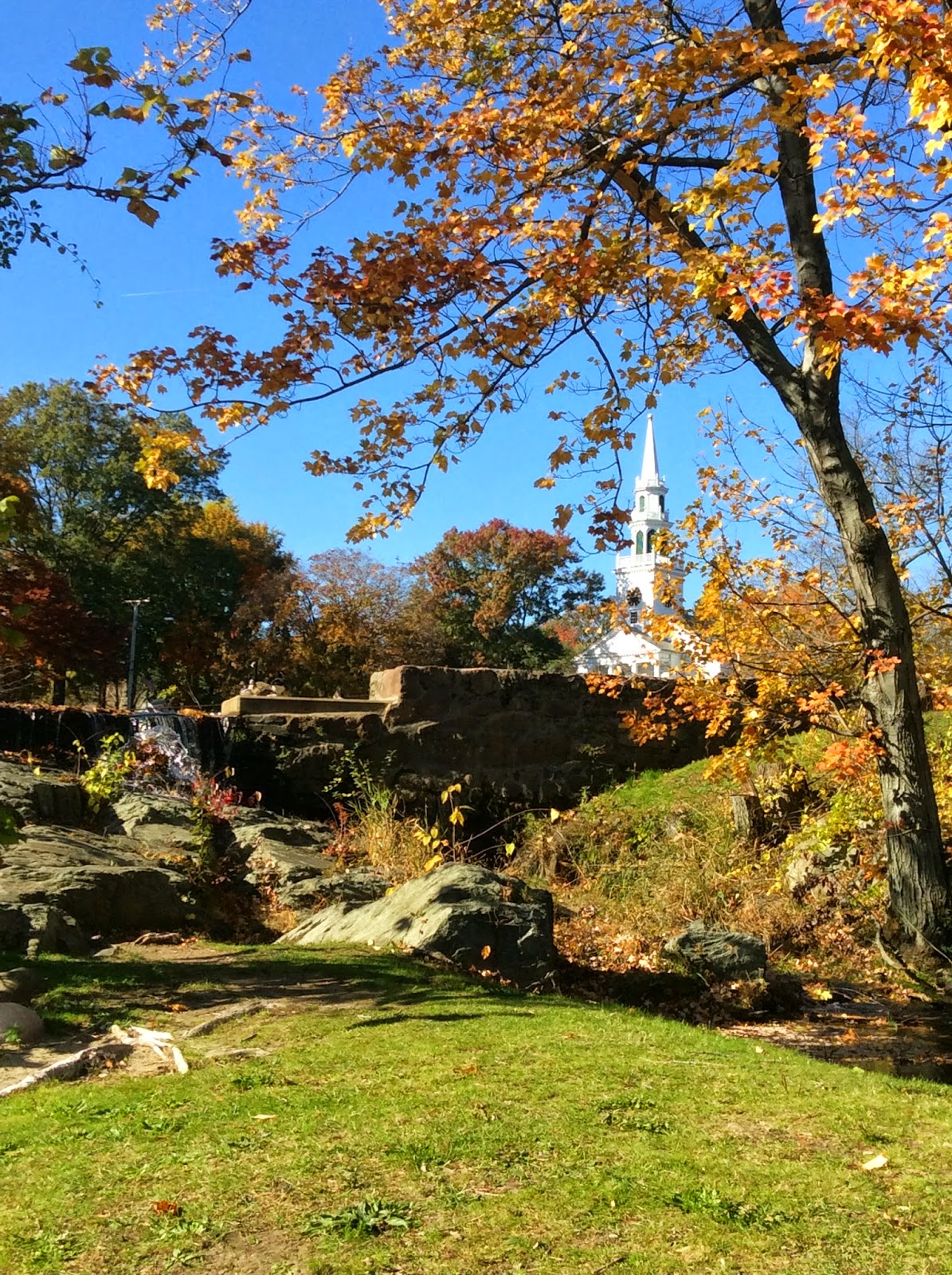
I love the fall, especially since moving out East.  Here the fall means a respite from humidity, gorgeous autumnal leaves, and apple picking.  It also means the glorious chance to sleep in on Daylight Savings day.  Best of all, it is the gateway to the holiday season and usually means planning a trip to California in the near future to see my family.

This is my very first Connecticut Autumn, and I am so impressed!  It is SO BEAUTIFUL.

As I recover, I've been able to take some nice walks to acquaint myself with our new town and, although I don't have a professional camera or anything close to it, I snapped a few photos.


These are from downtown, right by the courthouse!  YES!  A duckpond, bridge, and waterfall in front of the courthouse!  And all the Philly courthouse has nearby is a 7-11...and junkies...


And these are from a nearby nature reserve where I like to take little hikes:

And how fortunate to have a nature reserve that abuts the Long Island Sound!  Lovely!


Finally, it turns out that I married a Halloween curmudgeon.  He's the Scrooge of Halloween.  But that makes it all the more impressive that he bought us these dried and naturally died gourds, cut into little Jack-o-Lanterns at an artisan fair we stopped at in Mystic, CT, on our honeymoon!  (Aww! xoxo!)

BOO!


Here is the really nice, full Donne quote (captioned at the beginning of post), from Sermons Preached on Christmas Day--

"IF I should declare what God hath done (done occasionally,) for my soul, where He instructed me for fear of falling, where He raised me when I was fallen, perchance you would rather fix your thoughts upon my illness, and wonder at that, than at God’s goodness, and glorify Him in that; rather wonder at my sins than at His mercies, rather consider how ill a man I was, than how good a God He is. If I should enquire upon what occasion God elected me, and writ my name in the book of life, I should sooner be afraid that it were not so, than find a reason why it should be so. God made sun and moon to distinguish seasons, and day and night, and we cannot have the fruits of the earth but in their seasons; but God hath made no decree to distinguish the seasons of His mercies; in Paradise, the fruits were ripe the first minute, and in Heaven it is always autumn, His mercies are ever in their maturity. We ask our daily bread, and God never says you should have come yesterday. He never says you must again to-morrow, but to-day if ye will hear His voice, to-day He will hear you. If some king of the earth have so large an extent of dominion in north and south, as that he hath winter and summer together in his dominions, so large an extent east and west as that he hath day and night together in his dominions, much more hath God mercy and judgment together; He brought light out of darkness, not out of a lesser light; He can bring thy summer out of winter, though thou have no spring; though in the ways of fortune, or understanding, or conscience, thou have been benighted till now, wintred and frozen, clouded and eclipsed, damped and benumbed, smothered and stupified till now, now God comes to thee, not as in the dawning of the day, not as in the bud of the spring, but as the sun at noon, to illustrate all shadows, as the sheaves in harvest, to fill all penuries, all occasions invite His mercies, and all times are His seasons."